Musica: A Complete Guide to Music, Its History, Elements, and Power
Musica is the Italian, Spanish, Portuguese, and Latin word for music, and it names one of the few experiences every human culture shares. At its core, music is organized sound – pitch, rhythm, and timbre arranged in time to express emotion, tell stories, mark rituals, and connect people. This guide explains what musica means, the elements that build it, how it evolved across centuries, why it affects the brain, and how the modern music industry works.

What Does “Musica” Mean?
The word traces back to the Greek mousike, meaning “art of the Muses,” the goddesses of inspiration in Greek mythology. Latin adopted it as musica, and the Romance languages carried it forward: musica in Italian, Spanish, and Portuguese, musique in French. English shortened it to “music,” but the underlying idea stayed the same – sound shaped by human intention.
That distinction matters. A thunderclap is loud and rhythmic, but it is not musica. Music requires deliberate organization: a chosen pitch, a timed beat, a structured beginning and end. Everything from a lullaby to a symphony to a three-minute pop single fits that definition.

The Building Blocks: What Makes Music Music?
Musicians and theorists describe music through a shared vocabulary of elements. Most pieces use all of them at once, which is why a single song can feel both familiar and endlessly varied.
| Element | What It Describes | Example in Practice |
|---|---|---|
| Melody | A sequence of pitches heard as one line | A sung chorus you can hum |
| Harmony | Pitches sounded together as chords | Guitar chords supporting a vocal |
| Rhythm | Timing, duration, and pattern of sounds | A drum groove or a clapped beat |
| Dynamics | Loudness and changes in volume | A gradual crescendo into a finale |
| Timbre | Tone color, or the “voice” of an instrument | A trumpet versus a violin playing the same note |
| Texture | How many layers sound at once and how they relate | A solo voice compared with a full choir |
| Form | The overall shape and order of a piece | Verse-chorus-verse in a pop song |
These elements rarely work in isolation. A melody needs rhythm to give it shape, harmony changes the emotional color of that melody, and dynamics decide whether a chorus feels triumphant or intimate. Change one element and the entire piece shifts – which is why two songs built from the same four chords can sound completely different.
Culture adds another layer. Scales, tuning systems, and rhythmic cycles vary widely around the world: a raga in Indian classical music, a maqam in Arabic traditions, and a twelve-bar blues in American music all organize pitch and time differently, yet each one uses the same fundamental building blocks.

How Music Evolved Across Centuries
Prehistory and the ancient world. Bone flutes dated to roughly 40,000 years ago are among the oldest known instruments, suggesting that music predates writing by tens of thousands of years. Ancient civilizations tied music to ritual and cosmology: Egyptian temple songs, Greek modes, and Chinese court music all treated sound as a structured, meaningful art rather than casual entertainment.
The medieval and Renaissance eras. In Europe, the Church became the great patron of music. Gregorian chant gave way to polyphony – multiple independent vocal lines – and by the Renaissance, composers were writing complex choral works for cathedrals and courts. Notation systems matured during this period, allowing music to be written down, preserved, and taught across generations.
The Baroque, Classical, and Romantic periods. Between roughly 1600 and 1900, Western music expanded in scale and emotional range. The Baroque era brought opera, the concerto, and dense counterpoint. The Classical period prized balance and clear form, producing the symphony and the string quartet. The Romantic era pushed toward personal expression, larger orchestras, and dramatic harmonic language.
The twentieth century. Recorded sound changed everything. Blues, jazz, rock and roll, hip-hop, and electronic music emerged from the collision of technology, migration, and youth culture. Composers experimented with atonality and new rhythms while radio and records turned local sounds into global movements.
The digital age. The compact disc, MP3, and streaming moved music from physical objects to instant access. Today a listener can move from a 1950s recording to a song released this morning in a single swipe, and an independent artist can reach an audience on the other side of the world without a traditional record deal.
How Music Affects the Brain and Body
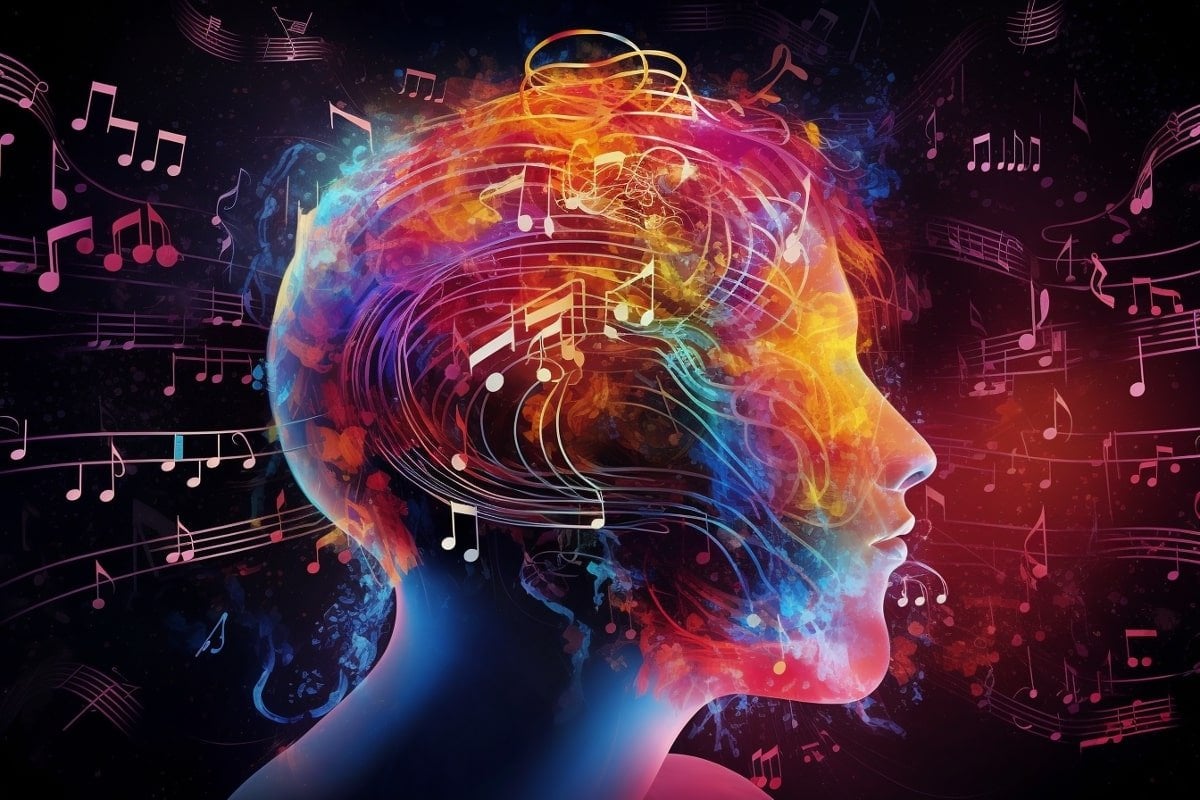
Music engages more areas of the brain than almost any other activity. The auditory cortex processes pitch and rhythm, the motor system tracks the beat, the hippocampus links songs to memory, and the limbic system – including the amygdala – generates emotional response. Listening to music you love can trigger dopamine release, the same reward chemical associated with food and other pleasures.
The effects go beyond pleasure. Music can lower perceived stress, reduce blood pressure, and improve mood. It supports language recovery in stroke patients and helps people with dementia access memories that conversation alone cannot reach. Music therapy is now a recognized clinical practice used in hospitals, rehabilitation centers, and care homes.
Music is also deeply social. Singing or playing together synchronizes breathing and movement, and that shared timing builds trust and cooperation. From stadium concerts to a family singing at a birthday, the communal side of musica may be its oldest and most powerful function.

How the Modern Music Industry Works
Today’s industry is built on several interconnected streams of income. Streaming platforms pay royalties based on plays, though the per-stream rate is small and volume matters enormously. Recorded music sits alongside publishing, which covers the composition itself – lyrics and melody – and pays songwriters separately from performers.
Live performance remains a major revenue source for established artists, often outweighing recorded income. Sync licensing places songs in films, television, advertisements, and video games, offering another path to both income and exposure. Merchandise, brand partnerships, and direct fan support through subscription platforms round out the picture.
Behind every release is a team: songwriters, producers, session musicians, engineers, mixers, mastering specialists, managers, and marketers. Independent artists increasingly handle several of these roles themselves, using affordable recording software and social media to build an audience before or without a label.
Why Musica Still Matters
Music has survived every technological shift because it does something no other medium does quite as efficiently: it carries emotion and memory in a form that can be shared instantly. A song can preserve a summer, a person, or a place more vividly than a photograph, and it can cross language barriers without translation.
Understanding the elements, the history, and the science behind musica deepens the experience of listening. Whether you are a casual listener, a student of music theory, or an artist building a career, the same truth holds: organized sound is one of humanity’s oldest and most enduring tools for connection.